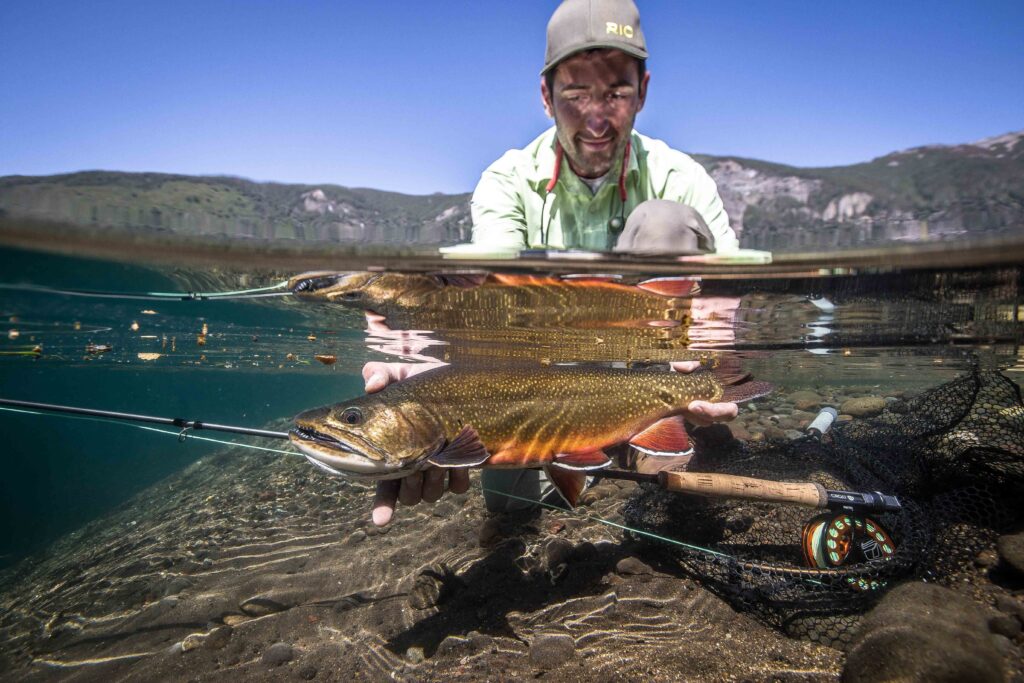
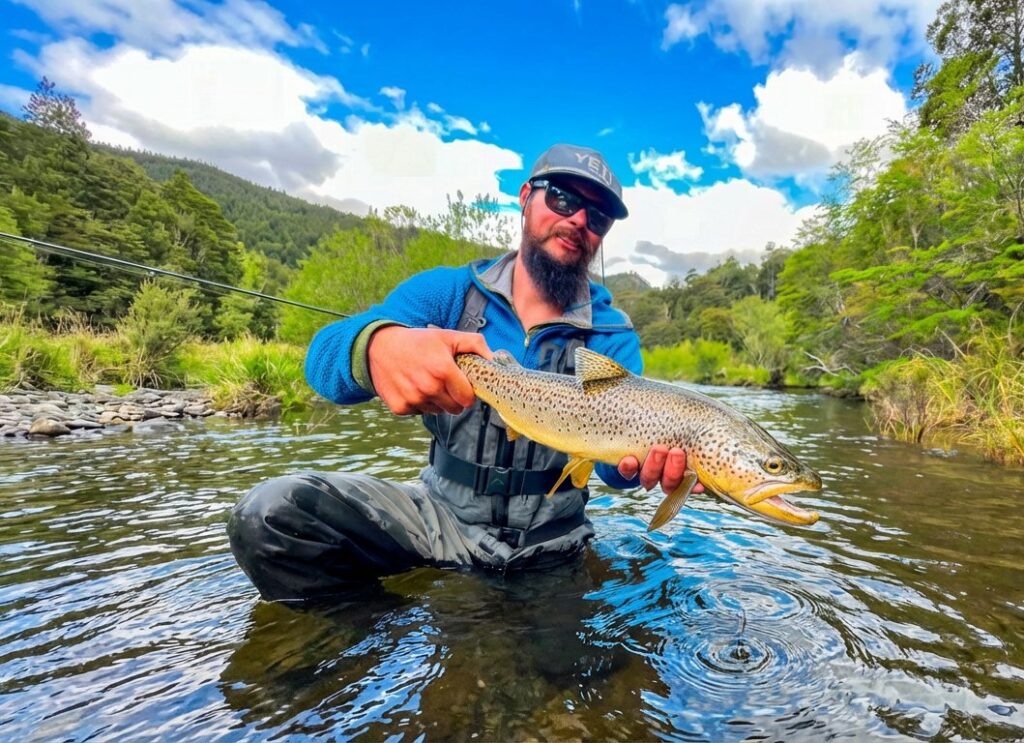
Patagonia Argentina's ultimate 5-star fishing adventure

Fly Fishing Equipment for

Manso Waters Lodge

Fly Fishing Equipment for

Manso Waters Lodge

Fly fishing gear suitable for a great day of expedition

Bariloche is undoubtedly one of the world's best fly-fishing destinations. Its crystal-clear, fast-flowing rivers, breathtaking and wild landscapes, unpredictable weather, and abundant trout population make it a paradise for anglers. But it's not just about showing up and casting a line: to be successful, you need the right equipment, precise technique, and knowledge of the seasons.

I'm Emanuel Medina, a local guide with 40 years of experience fly-fishing in Bariloche. Since childhood, I've spent countless days on Patagonian rivers, learning to interpret the waters, understand trout behavior, and perfect my techniques. Our company, Manso Waters Lodge, was born from this passion and knowledge, and today I want to share it with you so you can have as great a time as I have. In this guide, I'll share everything you need to know about the ideal fly-fishing equipment in Bariloche, as well as some secrets known only to local guides.

You should know that you can bring your own suitable equipment regardless of the length of your stay, and we also have high-quality equipment available for you. If you're staying for more than four days and are part of a large group, I always recommend bringing your own waders and boots, as this is better for individual sizes and usage.

Essential Fly Fishing Gear for Your Visit to Manso Waters Lodge

The right equipment makes all the difference between a successful day and a frustrating one. Here are my recommendations based on decades of experience.

Rods: 5-7 weight rods for general fishing; a light 4-5 weight rod is useful for dry fly fishing at dusk or in small streams.

Fly lines: Floating lines for small dry flies/streamers; fast sinking tippet (9 m, 150-250 g) for lakes and deeper water.

Leads and tippets: 2.3-2.7 m leader, 2x-5x tippet (fluorocarbon recommended). Bring extra reels (2x-6x).

Flies: Streamers: Woolly Buggers, dragonfly nymphs, large weighted attractors; dry flies: rubber-legged flies, caddisflies, mayflies, ground flies.

Footwear and Clothing: Breathable waders, wading boots with rubber soles, layers of warm clothing, a sun hat, and waterproof clothing. Wading boots must be cleaned to prevent the introduction of invasive species.

Polarization and Accessories: Polarized sunglasses, an optional bite indicator, and tools for assembling various rods (floating and sinking).

Essential Fly Fishing Gear for Your Visit to Manso Waters Lodge

The right equipment makes all the difference between a successful day and a frustrating one. Here are my recommendations based on decades of experience.

Rods: 5-7 weight rods for general fishing; a light 4-5 weight rod is useful for dry fly fishing at dusk or in small streams.

Fly lines: Floating lines for small dry flies/streamers; fast sinking tippet (9 m, 150-250 g) for lakes and deeper water.

Leads and tippets: 2.3-2.7 m leader, 2x-5x tippet (fluorocarbon recommended). Bring extra reels (2x-6x).

Flies: Streamers: Woolly Buggers, dragonfly nymphs, large weighted attractors; dry flies: rubber-legged flies, caddisflies, mayflies, ground flies.

Footwear and Clothing: Breathable waders, wading boots with rubber soles, layers of warm clothing, a sun hat, and waterproof clothing. Wading boots must be cleaned to prevent the introduction of invasive species.

Polarization and Accessories: Polarized sunglasses, an optional bite indicator, and tools for assembling various rods (floating and sinking).

Fly Fishing Techniques and Selection by Season

Early season (November-mid-December): Use sinking lines and well-weighted streamers (size 4-10 dragonfly nymphs, woolly buggers) to fish for deep-water trout in the upper reaches.

Mid-season (mid-December-January): Hatches of dragonflies and other aquatic insects generate a lot of dry fly activity, especially near lakes.

Late season (February-March): Terrestrial patterns, such as ants and grasshoppers, become key during periods of low activity at midday, and dry fly fishing intensifies in the evenings.

Autumn (March-April): The waters cool again; flood-growing trout feed aggressively on large attractor dry flies, rubber-legged flies, and streamers.

Fly Fishing Techniques and Selection by Season

Early season (November-mid-December): Use sinking lines and well-weighted streamers (size 4-10 dragonfly nymphs, woolly buggers) to fish for deep-water trout in the upper reaches.

Mid-season (mid-December-January): Hatches of dragonflies and other aquatic insects generate a lot of dry fly activity, especially near lakes.

Late season (February-March): Terrestrial patterns, such as ants and grasshoppers, become key during periods of low activity at midday, and dry fly fishing intensifies in the evenings.

Autumn (March-April): The waters cool again; flood-growing trout feed aggressively on large attractor dry flies, rubber-legged flies, and streamers.

Meet our team of guides and follow us on Instagram!

Meet our team of guides and follow us on Instagram!