Fly Fishing on the
Manso Waters Lodge
Fly Fishing on the
Manso Waters Lodge
Discover more about fly fishing in this region of Bariloche
Our company has over a decade of experience in fly fishing in Bariloche. We are passionate, adventurous, and dedicated to pleasing our clients, whether they are beginners or experienced anglers. We explore the Manso River, the Foyel River, Lake Hess, Lake Mascardi, Lake Guillelmo, and Lake Fonk, where we fish for the famous wild trout, including its three varieties: brown, rainbow, and brook. Each location and trout variety has its own secrets for catching them. We practice catch and release, believing in the importance of conserving aquatic life, and we teach this principle.
Fly Fishing on the Manso River
It begins in the heart of Nahuel Huapi National Park, at Cerro Tronador, near Bariloche, Argentina. It has several sections; the lower one is the best option for anglers. The Manso River is approximately 130 km long and flows into Chile, joining the Puelo River before reaching the Pacific Ocean. Its course includes several lakes, such as Lake Mascardi and Lake Hess, and is renowned for its scenic beauty and excellent fly-fishing opportunities. It is undoubtedly one of the most beautiful landscapes in Patagonia, with unparalleled crystal-clear waters.
The geomorphology of the Manso River varies constantly: from Class II+ rapids and deep currents to very shallow, calm pools where the water barely flows.
The floating section of this stretch begins at Lake Steffen, where, with luck, you might witness a small spawning event that will put a good number of rainbow trout practically within arm's reach. This doesn't make them easy to catch, as these flies measure 22 inches and the trout become very selective.
Once on the river, fishing will be done primarily with floating lines, nymphs, or dry flies. Pearlhead and Pheasant Tail lines are excellent choices. Attractor lures, such as the Madame X or Stimulator, also work well and increase the chances of catching a resident brown trout.
In some sections of the river, you'll find large pools with rainbow trout feeding on or near the surface. In these pools, reduce the fly size and lengthen the leader. A size 18 Mayfly Spinner could fool these selective rainbow trout.
If you want to know more about the Rio Manso and its fly fishing opportunities, you can contact us or read our articles/magazines available for you.
Fly Fishing on the Manso River
It begins in the heart of Nahuel Huapi National Park, at Cerro Tronador, near Bariloche, Argentina. It has several sections; the lower one is the best option for anglers. The Manso River is approximately 130 km long and flows into Chile, joining the Puelo River before reaching the Pacific Ocean. Its course includes several lakes, such as Lake Mascardi and Lake Hess, and is renowned for its scenic beauty and excellent fly-fishing opportunities. It is undoubtedly one of the most beautiful landscapes in Patagonia, with unparalleled crystal-clear waters. The geomorphology of the Manso River varies constantly: from Class II+ rapids and deep currents to very shallow, calm pools where the water barely flows.
The floating section of this stretch begins at Lake Steffen, where, with luck, you might witness a small spawning event that will put a good number of rainbow trout practically within arm's reach. This doesn't make them easy to catch, as these flies measure 22 inches and the trout become very selective.
Once on the river, fishing will be done primarily with floating lines, nymphs, or dry flies. Pearlhead and Pheasant Tail lines are excellent choices. Attractor lures, such as the Madame X or Stimulator, also work well and increase the chances of catching a resident brown trout.
In some sections of the river, you'll find large pools with rainbow trout feeding on or near the surface. In these pools, reduce the fly size and lengthen the leader. A size 18 Mayfly Spinner could fool these selective rainbow trout.
If you want to know more about the Rio Manso and its fly fishing opportunities, you can contact us or read our articles/magazines available for you.
Only
Only
Fly fishing on the Foyel River
The Foyel River is one of the most unique and entertaining destinations for Fly Fishing Patagonia has to offer. Located in a remote, untouched corner of Northern Patagonia, Argentina, this beautiful river combines easy action, wild scenery, and technical brown trout fishing into one unforgettable experience.
At Manso Waters Lodge, we believe the Foyel River is one of the best places in Patagonia for beginner fly fishermen, families, children, and anglers looking to experience authentic Patagonia fly fishing surrounded by pristine wilderness.
The river is full of energetic rainbow trout that feed aggressively in the riffles and current seams throughout the day. Smaller trout are abundant, active, and willing to eat almost any well-presented fly. For beginners learning the basics of casting and presentation, the Foyel River offers constant opportunities and fast-paced fishing action.
Brown trout, however, are a completely different challenge.
Unlike rainbow trout, brown trout are extremely cautious and intelligent. They notice movement immediately, hide quickly, and disappear into deep pools or structure long before most anglers even see them. This technical aspect is what makes fly fishing on the Foyel River so rewarding for experienced fishermen seeking a more natural and strategic approach.
The best season for larger brown trout is usually November and December. During these months, anglers with accurate casting skills and delicate dry fly presentations can encounter truly beautiful fish. Large attractor dry flies and terrestrial patterns, especially ants, are some of the most effective flies for Foyel River brown trout.
Fishing these trout requires stealth. At Manso Waters, our guides recommend fishing upstream, staying close to the bank, and avoiding unnecessary wading. Even small rocks that move underwater can alert the fish and send them hiding deep into the pools. The river teaches patience, precision, and observation — everything that makes Fly Fishing Patagonia such a special experience.
For tackle, lighter rods and 4X tippet usually perform best. Subtle presentations are extremely important in clear water conditions. Heavier rods can react too aggressively during short fights and increase the chances of breaking fine tippets.
One of the most special things about the Foyel River is its isolation. Few anglers ever fish these waters.
Explore our drone footage, Patagonia fly-fishing programs, and guided trips to see if the Foyel River is the perfect match for your next adventure in Argentina. Contact Manso Waters and tell us what kind of fly fishing experience you are searching for — our guides will help you build an unforgettable journey in the heart of Fly Fishing Patagonia.
Fly fishing on the Foyel River
The Foyel River is one of the most unique and entertaining destinations for Fly Fishing Patagonia has to offer. Located in a remote, untouched corner of Northern Patagonia, Argentina, this beautiful river combines easy action, wild scenery, and technical brown trout fishing into one unforgettable experience.
At Manso Waters Lodge, we believe the Foyel River is one of the best places in Patagonia for beginner fly fishermen, families, children, and anglers looking to experience authentic Patagonia fly fishing surrounded by pristine wilderness.
The river is full of energetic rainbow trout that feed aggressively in the riffles and current seams throughout the day. Smaller trout are abundant, active, and willing to eat almost any well-presented fly. For beginners learning the basics of casting and presentation, the Foyel River offers constant opportunities and fast-paced fishing action.
Brown trout, however, are a completely different challenge.
Unlike rainbow trout, brown trout are extremely cautious and intelligent. They notice movement immediately, hide quickly, and disappear into deep pools or structure long before most anglers even see them. This technical aspect is what makes fly fishing on the Foyel River so rewarding for experienced fishermen seeking a more natural and strategic approach.
The best season for larger brown trout is usually November and December. During these months, anglers with accurate casting skills and delicate dry fly presentations can encounter truly beautiful fish. Large attractor dry flies and terrestrial patterns, especially ants, are some of the most effective flies for Foyel River brown trout.
Fishing these trout requires stealth. At Manso Waters, our guides recommend fishing upstream, staying close to the bank, and avoiding unnecessary wading. Even small rocks that move underwater can alert the fish and send them hiding deep into the pools. The river teaches patience, precision, and observation — everything that makes Fly Fishing Patagonia such a special experience.
For tackle, lighter rods and 4X tippet usually perform best. Subtle presentations are extremely important in clear water conditions. Heavier rods can react too aggressively during short fights and increase the chances of breaking fine tippets.
One of the most special things about the Foyel River is its isolation. Few anglers ever fish these waters.
Explore our drone footage, Patagonia fly-fishing programs, and guided trips to see if the Foyel River is the perfect match for your next adventure in Argentina. Contact Manso Waters and tell us what kind of fly fishing experience you are searching for — our guides will help you build an unforgettable journey in the heart of Fly Fishing Patagonia.
Only
Only
About Fly Fishing for Patagonian Trout
We have a 6,000-hectare nature reserve across from the National Park in Bariloche. Our area is protected and well-maintained; we are one of the last areas in Argentine Patagonia with minimal fishing pressure. The quality of the trout in the Manso and Foyel rivers and the underlying lakes is superior, as they were originally brought from the United States before their genetics were modified. Now, in addition to the wild trout, we have the Manso Waters Lodge by the river where you can come and enjoy the sights and ferocity of these ancient trout. The rainbow trout we fish in our river are among the first introduced species and, being in a nature reserve, have not been artificially bred. The brown trout are very aggressive and combative, lying in wait to hunt. There are very few places in the United States and Europe where this feisty species exists, and the strength of the young trout is unmatched. A one-pound trout in Argentina is equivalent to a three-pound trout elsewhere in the world. We have the best lodge, and the quality of the fishing, as well as the crystal-clear, pure waters, are unique in the region, as they originate from the Tronador volcano, a protected, natural area within an inaccessible national park. At 12,000 feet above sea level, the Tronador volcano, with its glaciers, protects the headwaters of the Manso River, one of the world's most unparalleled fishing rivers.
Our fly-fishing company in Bariloche owns kilometers of river, one of the best for fly fishing in Argentine Patagonia. Clear waters, wild rainbow and brown trout abound throughout the summer.
Rainbow Trout
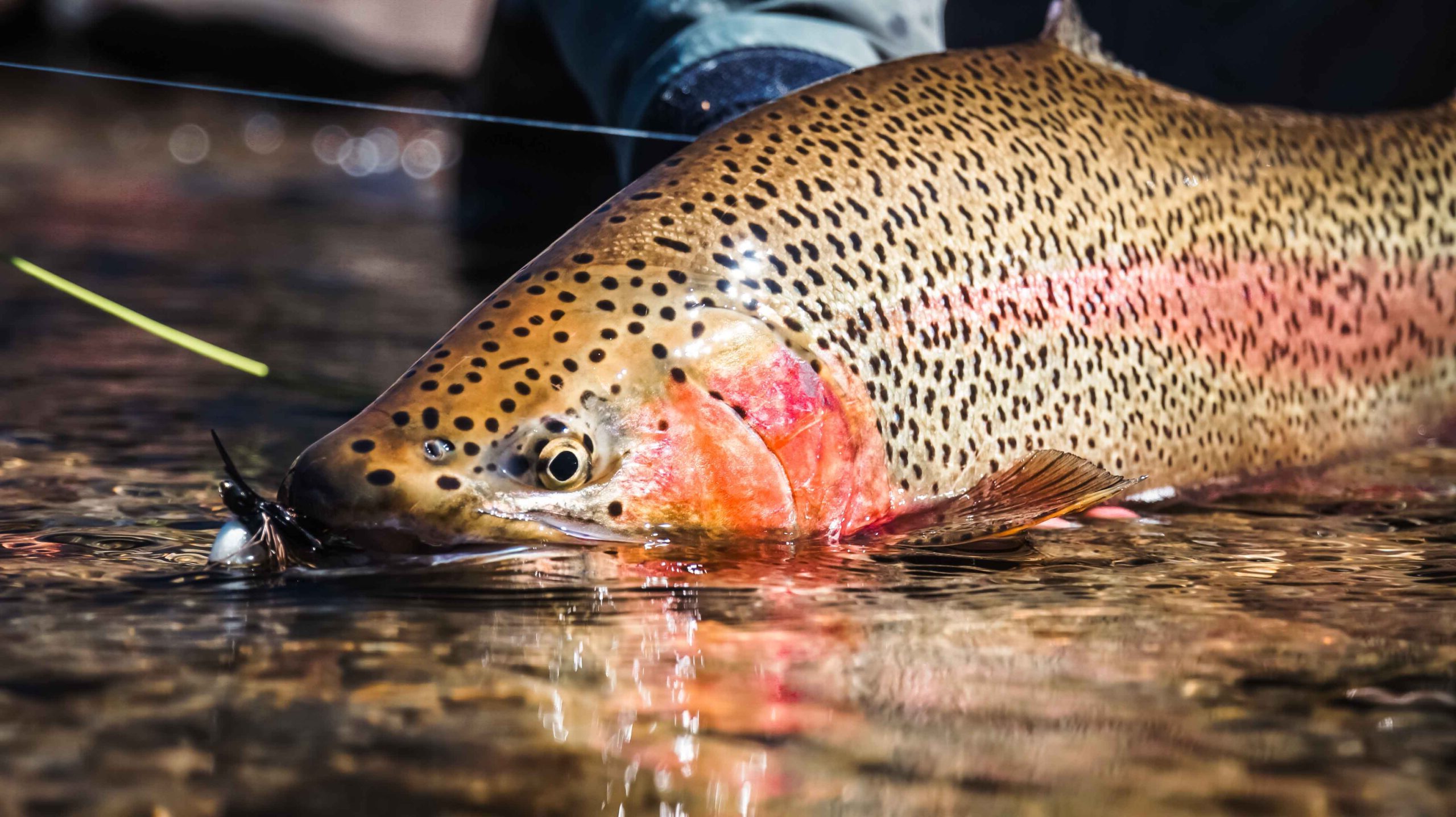
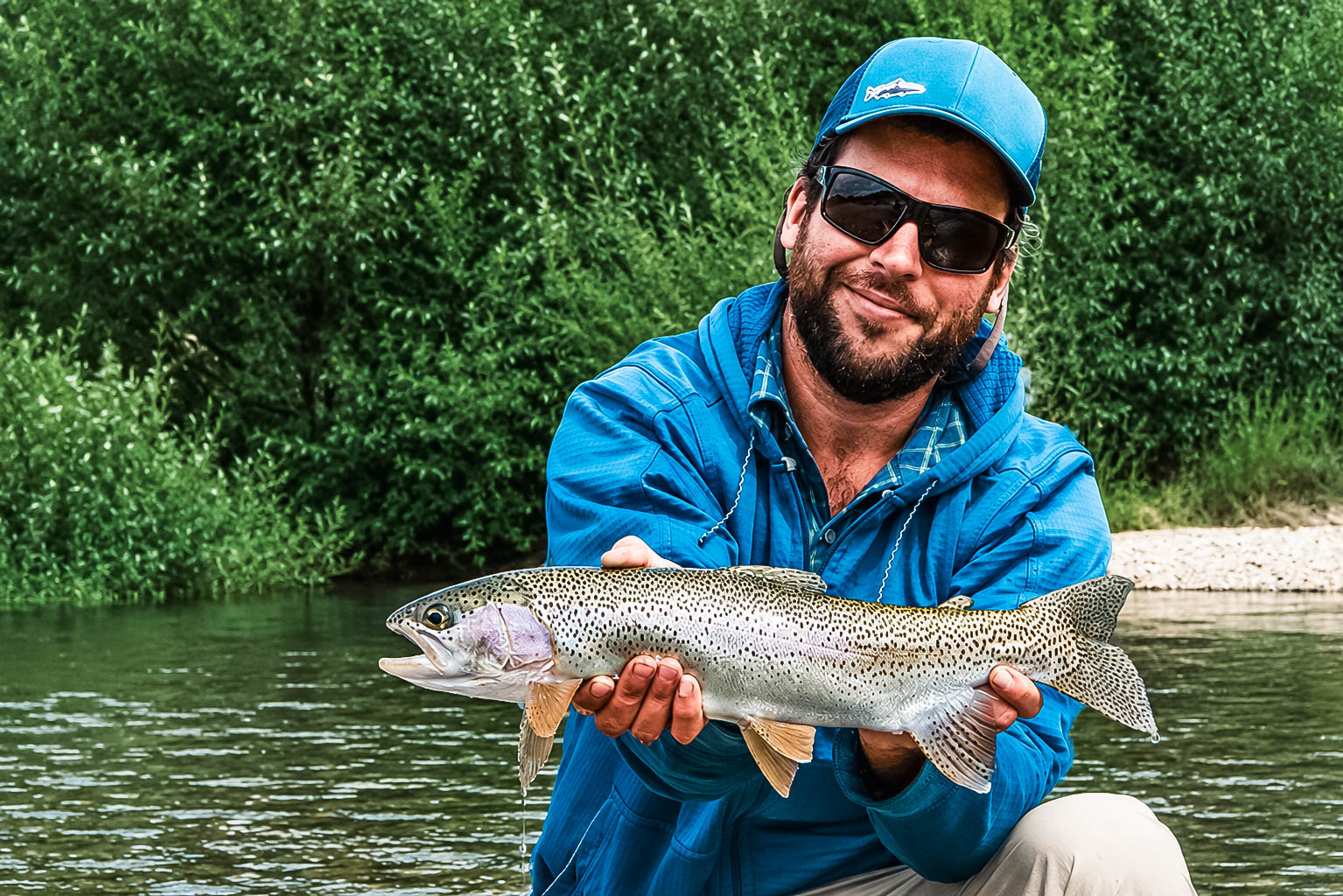
Rainbow trout patrol the crystal-clear waters, always alert to any opportunity to feed. They have a robust, elongated body due to their adaptation to fast-flowing currents. Their color is a striking silver with bluish stripes along their backs. They have a pink or reddish stripe on their sides, which intensifies in males or during spawning season. They also have well-defined black spots on their backs, tails, and dorsal fins. The food consumed by the trout in the Manso and Foyel Rivers makes them very strong and voracious, with an average weight of 0.5 to 1 kg. In the inland lakes and lagoons, the trout double that size. Rainbow trout prefer calm, well-oxygenated waters, characteristic of the Manso River and its rapids. They take refuge in deep pools, logs, or rocks. They are very active trout that feed at dawn and dusk, even in the middle of summer. Their diet is insectivorous, focusing mainly on mayflies, stoneflies and caddisflies; in lagoons and calmer waters, they prefer crustaceans, small fish and frogs.
Brown Trout
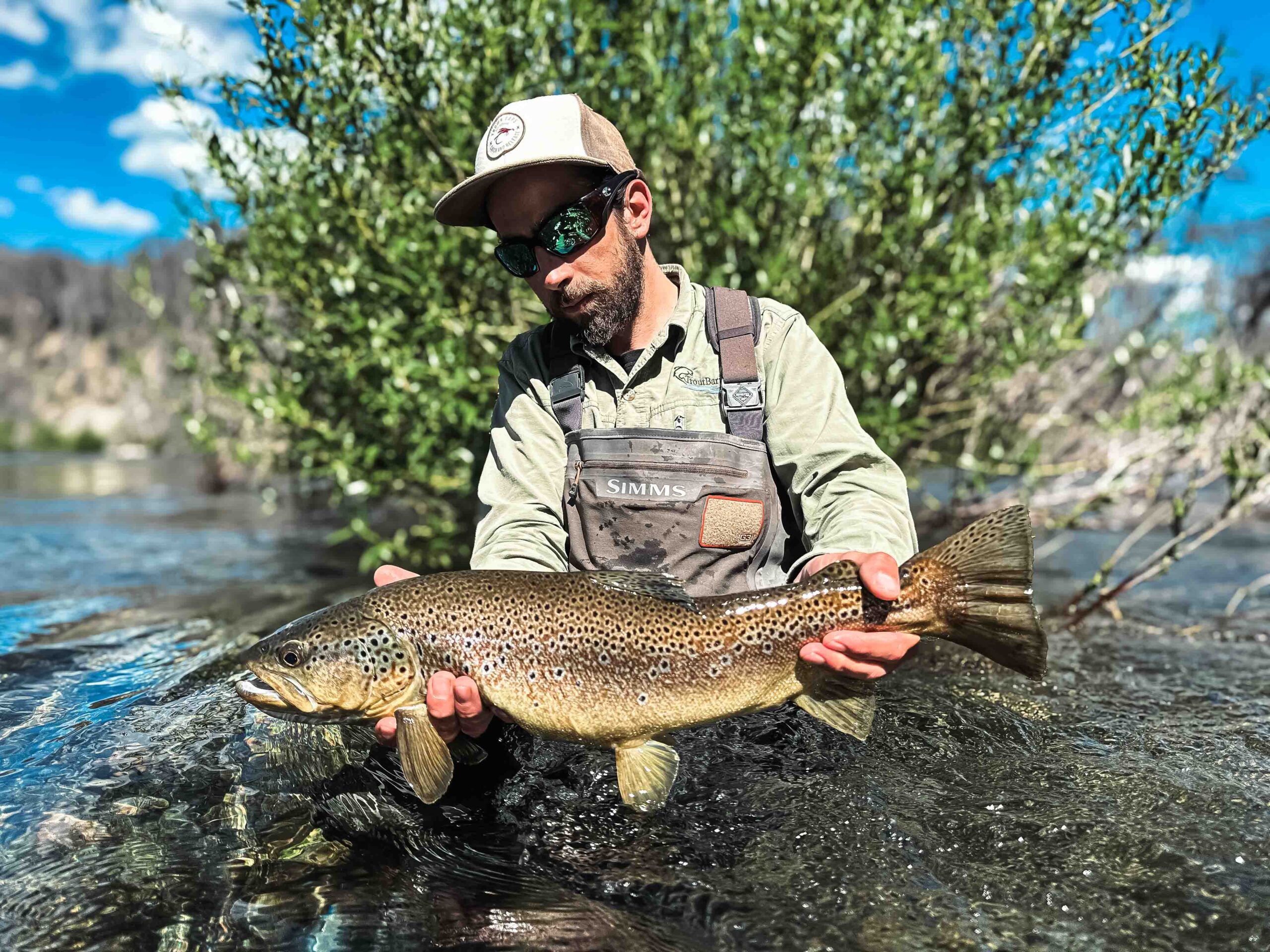
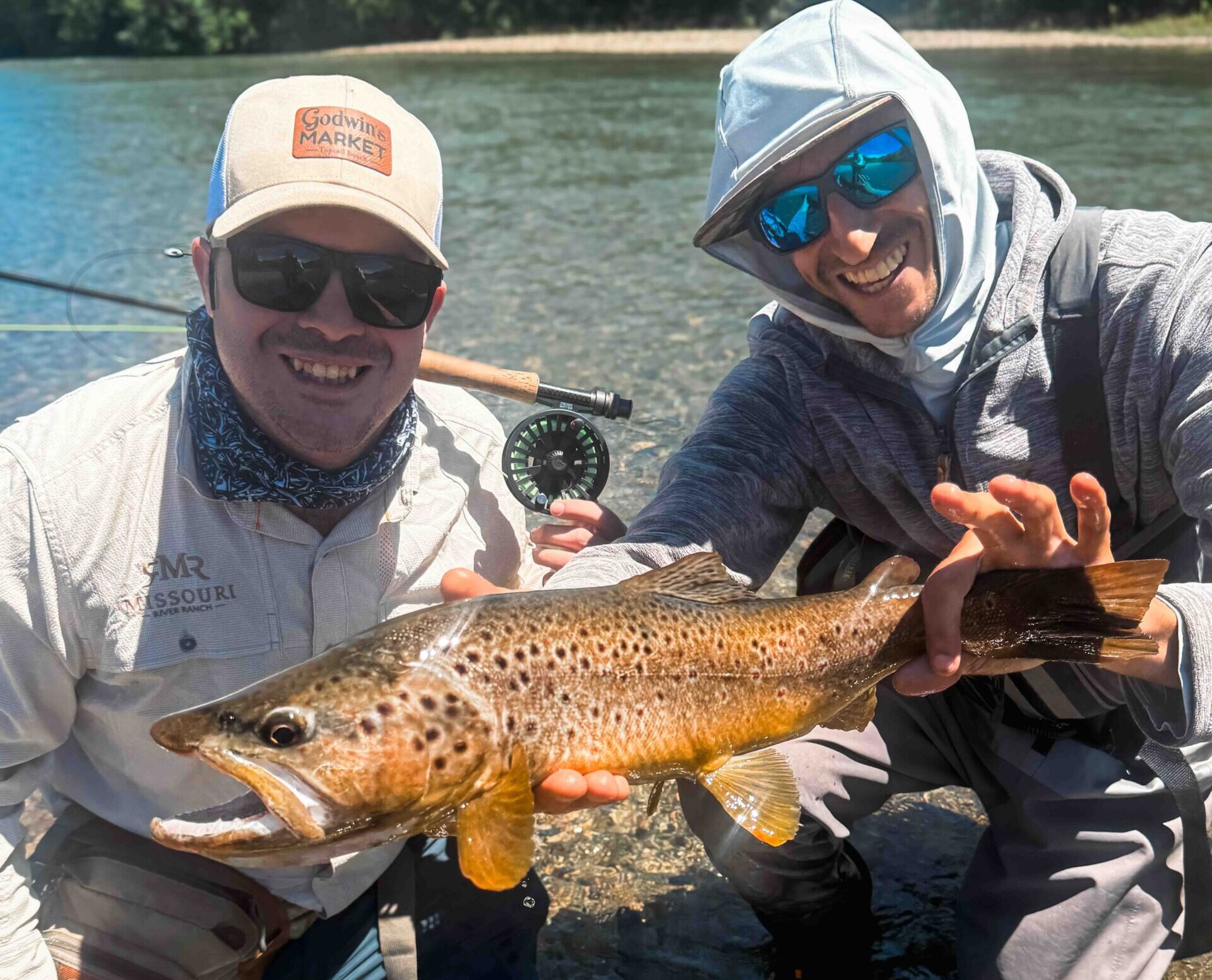
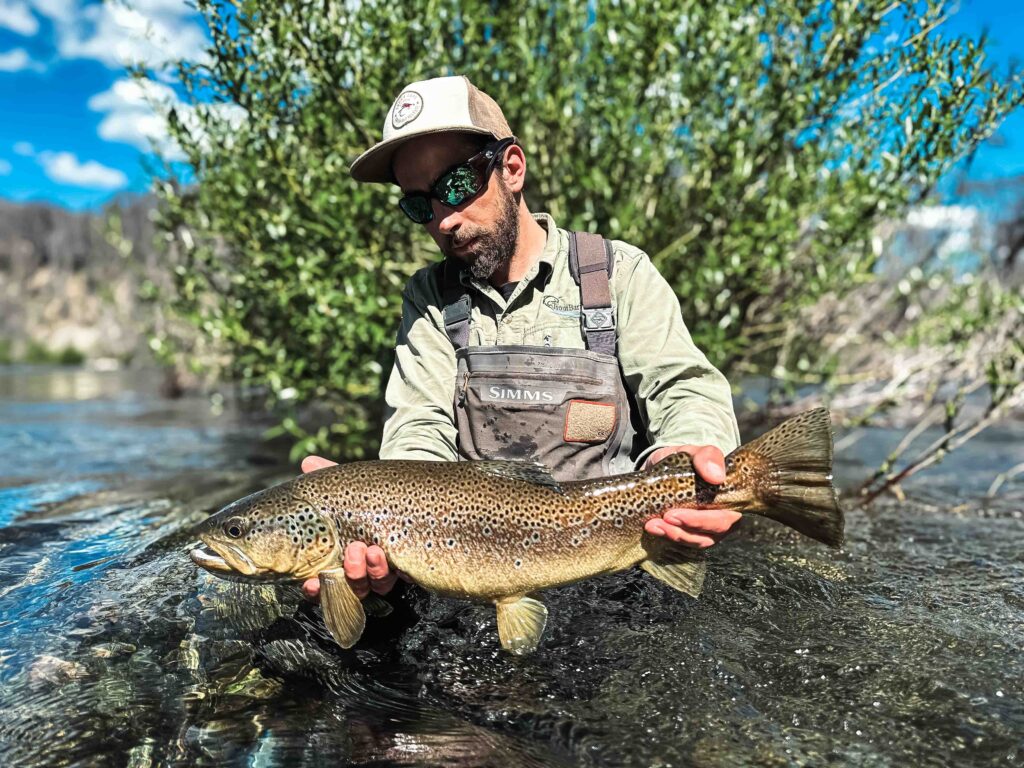
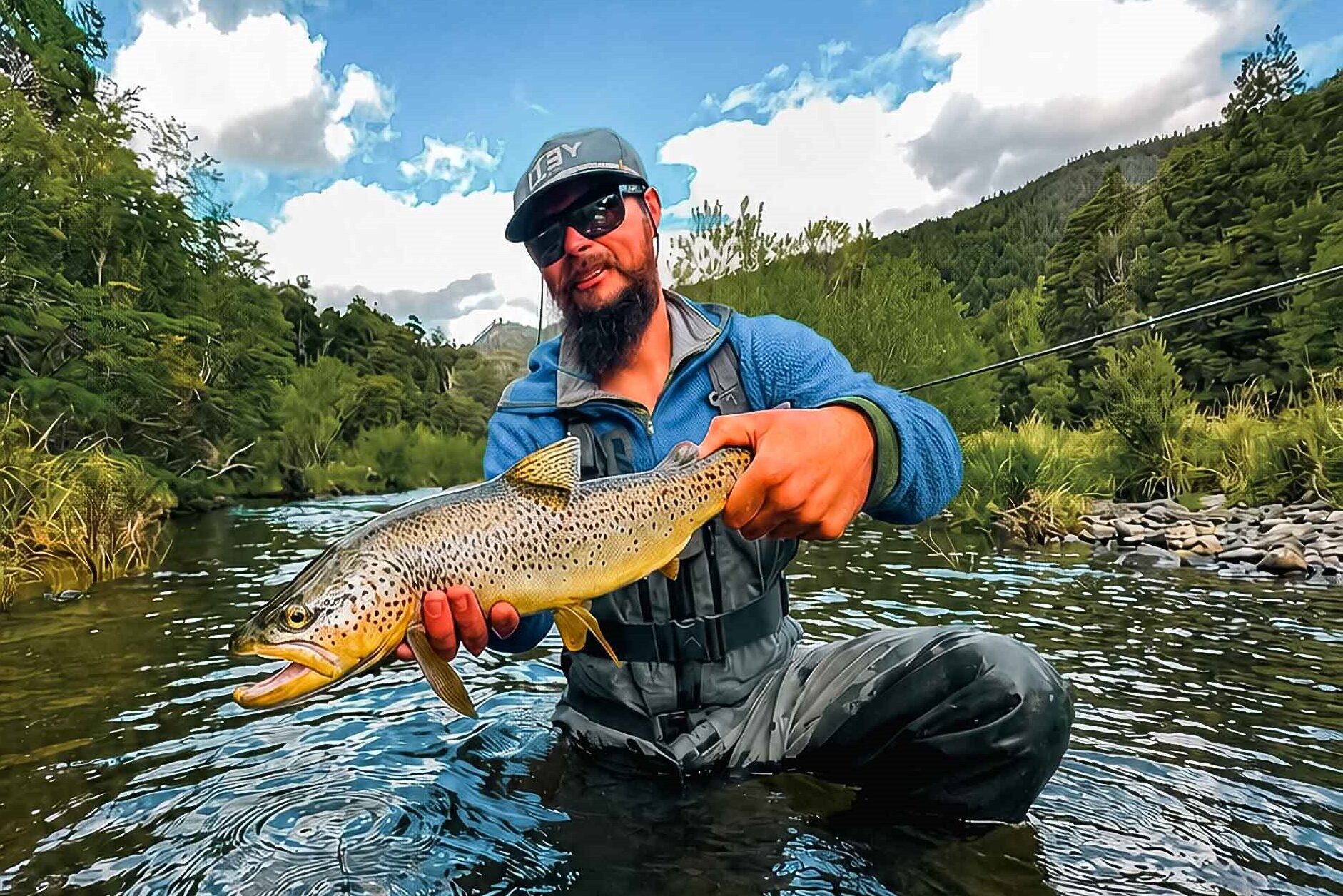
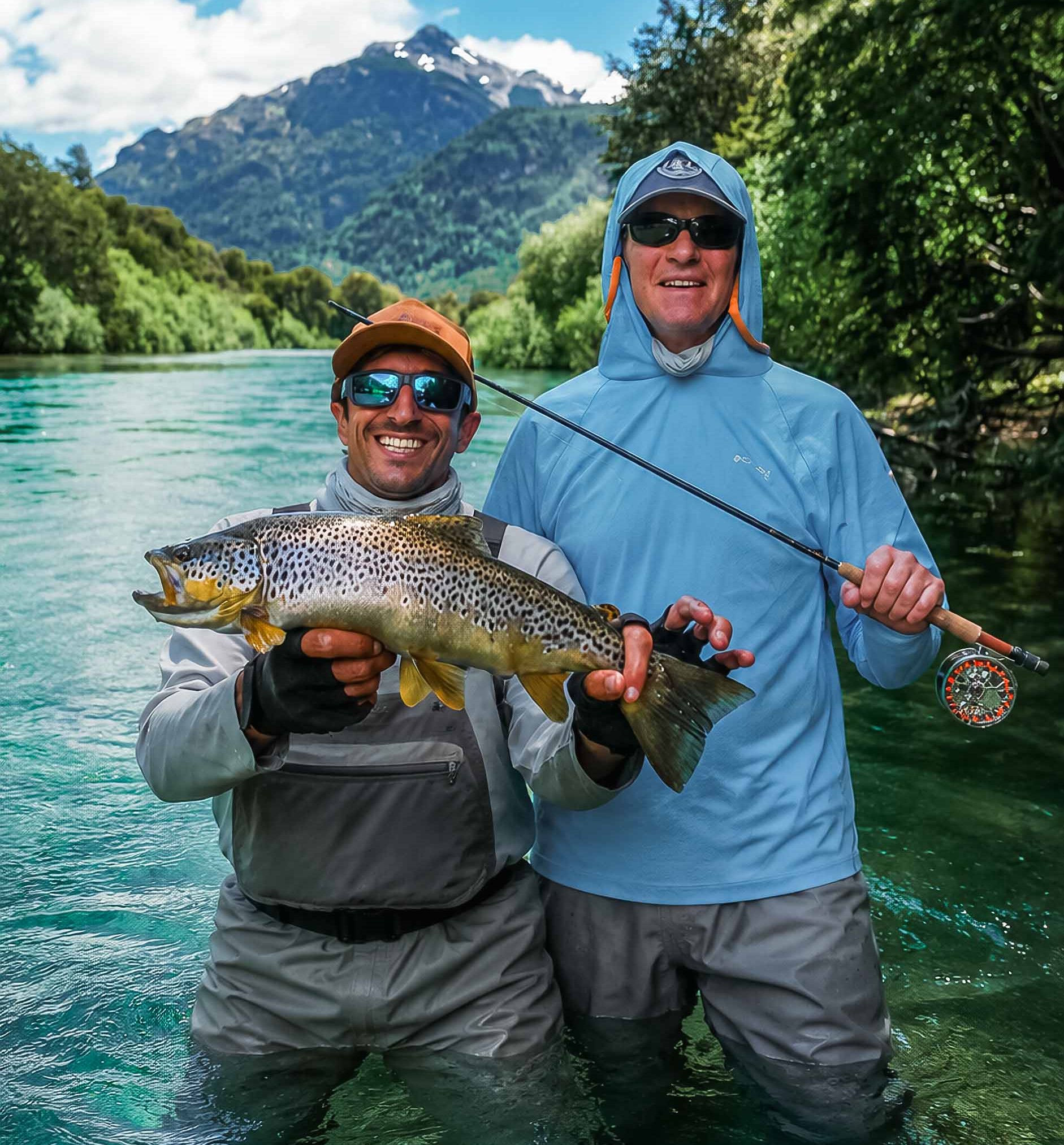
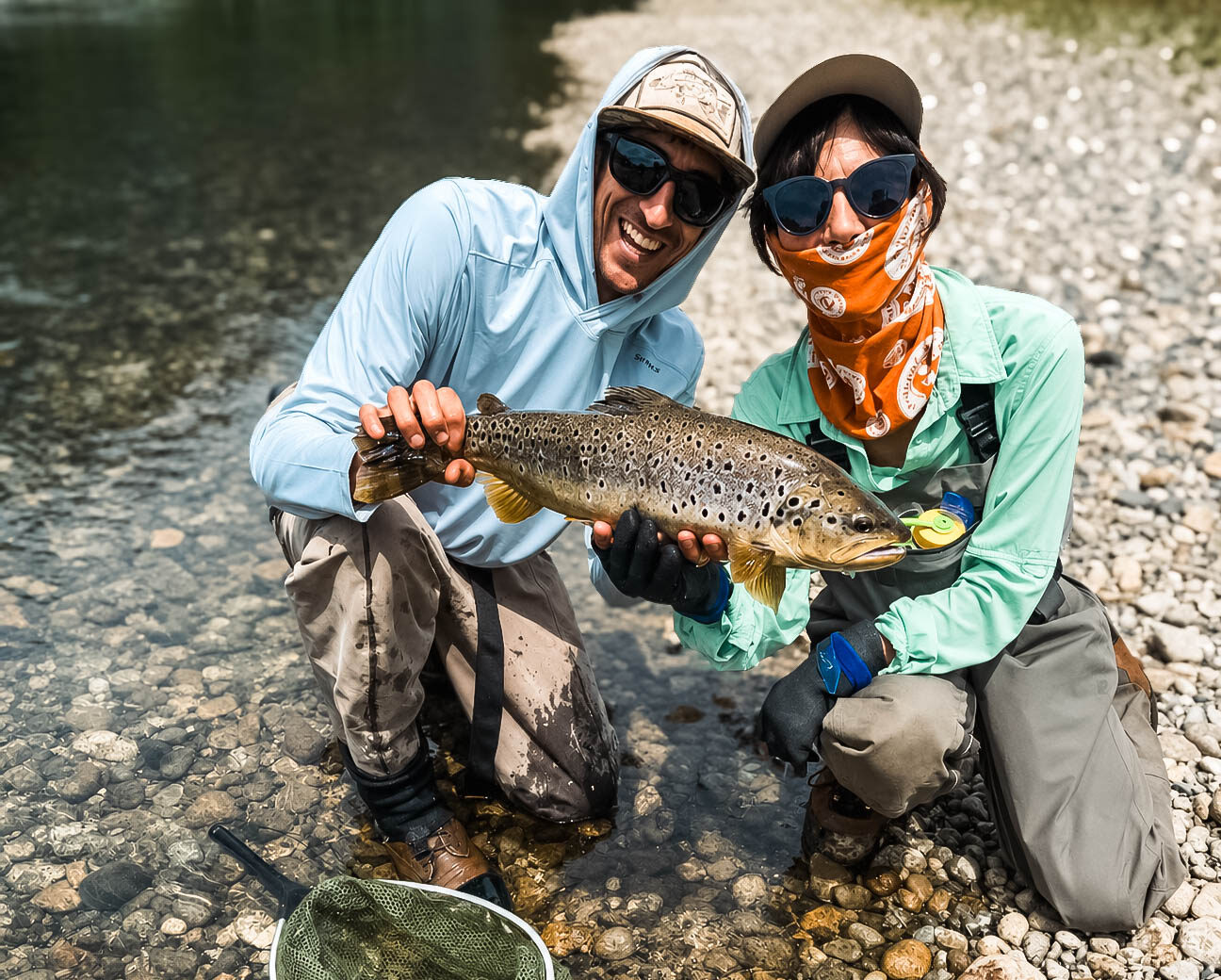
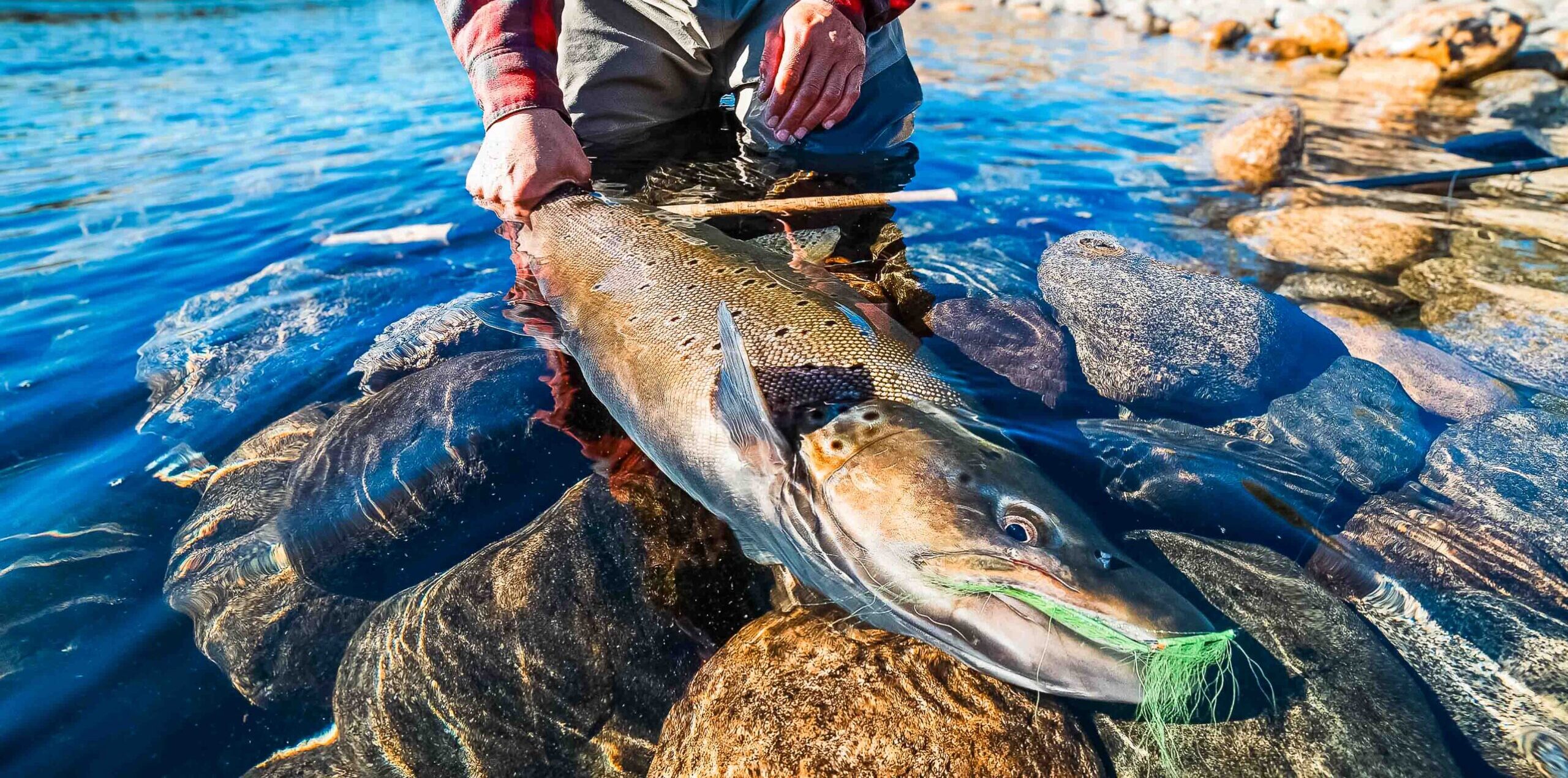
The brown trout of the Manso River behaves very differently from its sister, the rainbow trout; it is a highly aggressive and combative trout that lies in wait, hidden, to ambush its prey. Its characteristic color is golden brown with black and red spots. They usually have a dark back and a lighter belly, which allows them to camouflage themselves in deep water.
They hide under fallen logs, shaded banks, submerged roots, and deep pools, waiting to ambush their prey. They range in size from 0.5 to 2.5 kg and are stealthy and strong. They are very territorial and solitary. Their diet consists of crustaceans, small fish, and frogs, with a preference for attacking large streamers or brightly colored dry flies as they hatch.
Brook Trout
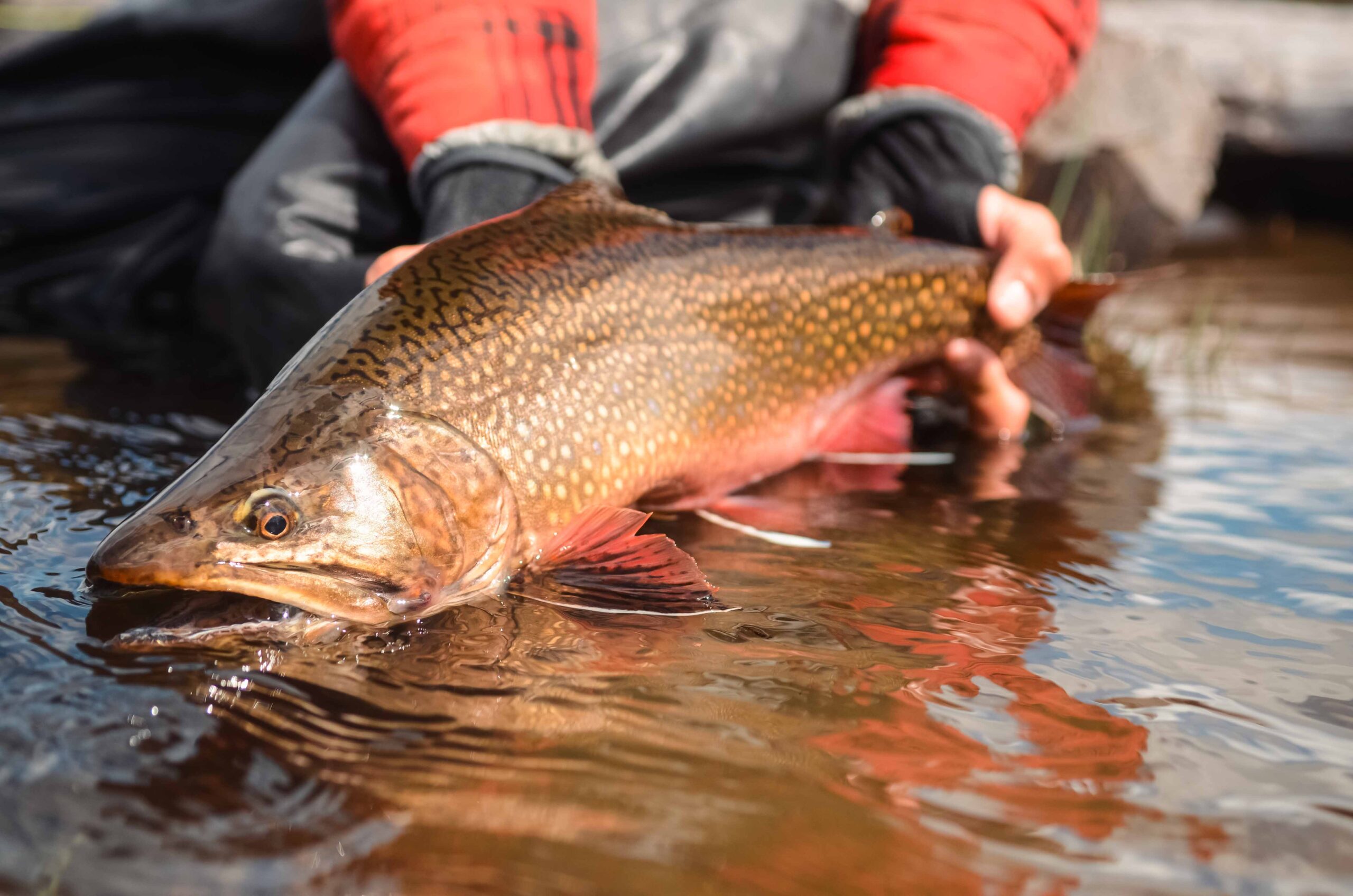
Brook trout are a jewel of cold waters, present in all the connected lakes and streams, although they are very scarce in the main channel of the Manso River. They are dark green on their backs, with red and orange spots on their bellies and fins. They weigh between 0.5 and 2 kg. They are usually found on submerged logs. Their diet is primarily insectivorous, consisting of mayflies, stoneflies, caddisflies, and nymphs; they also consume small fish, crustaceans, and worms. You will have success fishing with small dry flies and natural nymphs. What makes these trout unique is that, living in a natural environment without artificial stocking, their behavior is much more complex than that of fish raised elsewhere. The marked genetic differences between individuals make fishing techniques distinct and much more interesting than one might imagine.
They hide under fallen logs, shaded banks, submerged roots, and deep pools, waiting to ambush their prey. They range in size from 0.5 to 2.5 kg and are stealthy and strong. They are very territorial and solitary. Their diet consists of crustaceans, small fish, and frogs, with a preference for attacking large streamers or brightly colored dry flies as they hatch.
Fly fishing lakes around Manso Waters Lodge
The best lake has always been Lake Fonck, the furthest away, where we've offered camping trips for many years. Staying at our lodge, we can go and return in a single day, with less traffic and the assurance that we'll always catch good trout there. Next to this lake is Lake Hess, a gem for fly fishing in Bariloche. The Tronador volcano is visible in the background of this lake, accompanying us throughout the day. The number of fish is incredible, and the brook trout in this lake spend November, December, and until January 15th chasing down the shores. It's a type of fishing I've never seen as enjoyable as on Lakes Hess and Fonck.
Lake Guillelmo, like Lake Mascardi, is a calm lake with little wind, especially along its sheltered shores. We'll land there and drift fish close to the shore, always keeping an eye out for reeds and fallen trees. The best time to fish these lakes is always at the beginning of the season, in November and December, when the trout congregate at the mouths of rivers and streams. The best fly will depend on the local guide, but I recommend small streamers. Why? The fishing is more fun, and the strikes are much more aggressive. We'll find brook trout weighing 1 to 2 kilograms, especially in the bays. Casting streamers along the banks and also looking for brown trout under logs, we can have a very entertaining and incredible day, with many fish we've never seen before.
Explore fly fishing in Bariloche, in northern Patagonia Argentina
Whether you're an experienced angler or a beginner, Manso Waters Lodge is a must-visit destination. We'll meticulously plan your personalized fishing trip, taking into account the experience you want to have. It's always best to book in advance. We'll do our best for you!
Meet our team of guides and follow us on Instagram!